Kurt Reaches Milestone of Turning 30 Despite Chronic Laminitis
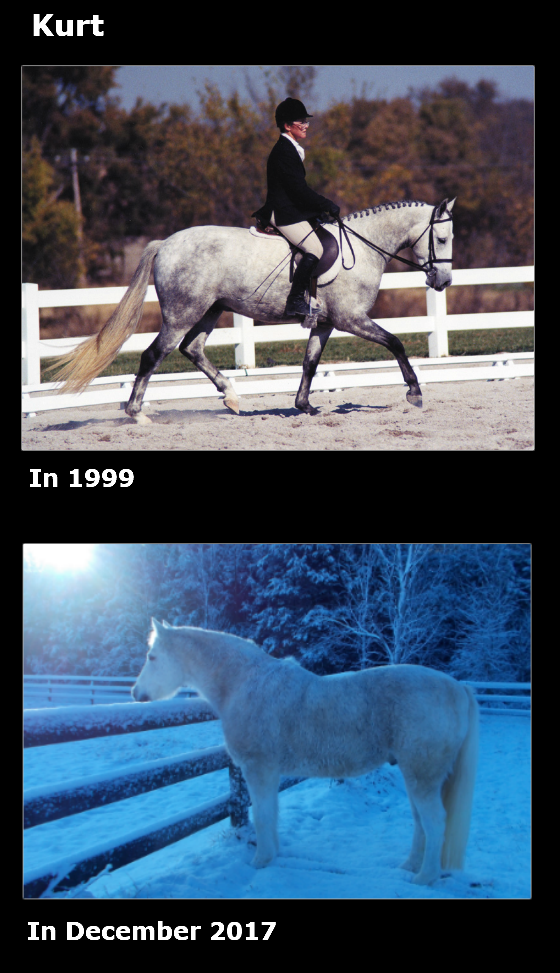
Kurt officially turned 30 years old in 2026.
This was a big victory for us, since he has had chronic laminitis for 16-ish years.
His feet did better in 2025 than previous years, despite us having the wettest April on record and then a prolonged drought in the fall. The drought was worse for his feet than the excess moisture. We did a lot of mani-pedi moisturizing sessions (hooves soaked in water, then covered in cream and protected in freezer bags held on by scrunchies for 20 to 30 minutes).
I continue to trim Kurt myself (13 years now), and I’m still afraid. His feet grow so high on the outside, that I have to trim them every three weeks. It’s not like I haven’t had enough practice. But, he still has odd looking feet, especially at the white line area, and his hoof wall at the toe never grows down. It grows forward. Thus, little of what I do when I trim him mirrors the trim of a more normal hoof, and Kurt needs to walk on his soles on the front feet. It doesn’t seem to bother him. I’m always concerned that I will leave too much or too little sole, and it will bother him.
Wonder Dust (with iodoform) turns out to be the best product I have used for improving his white line issues. I’ve tried many alternatives. The goal is to dry out the white line area but not the rest of the foot. I do have trouble with the new design of the Wonder Dust lid. The powder doesn’t want to come out. One can always take off the lid.
Kurt had one weird spot on the sole of his right front hoof for part of 2025. It started to be noticeable as a kind of wrinkled, darker area in the spring before it became a soft spot in June. If I had said, “Oh, that’s an abscess,” and opened it, it likely would have drained and gone away pretty quickly. But I wasn’t sure what it was, and I didn’t want to create a hole in his sole, given that bone infections in the foot can be life ending, so I dragged my feet. Once I did open it up, the sole area improved quickly. Kurt had to wear boots overnight for maybe a month to keep the sole clean.
But he’s usually sound without bute or boots, including now. He’s quite happy.
Teeth issues
Really, our biggest challenge in 2025 was his teeth.
He still has teeth, despite his age. He had his teeth floated in December 2025, more for information than anything. The vet had little to do other than remove a few sharp points.
The bottom teeth are flat. Apparently, that’s bad. Teeth need peaks and valleys to grind food.
The top teeth look good, but they do not have a good grinding surface to work against on the bottom.
As a result, Kurt doesn’t chew his pelleted food enough, and swallowing un-chewed pellets gives him a lot of gas. Then, he colics really quickly.
He was still eating a forage balancer early in 2025. It’s the feed he’s been getting for years.
Many prominent laminitis researchers are opposed to feeding laminitic horses senior feed due to the starch, so I have stayed away from it for maybe a decade.
But, my vet said in June after another bout of gas colic, “Give him the senior feed.”
Senior feed is designed to fall apart quickly, removing the need to chew. Giving Kurt the senior feed wasn’t enough to stop the bouts of colic completely. I tried soaking the senior feed to make a mash. Kurt is not a fan of wet food, at least not yet. So I started grinding the senior feed into a powder with a coffee grinder in November, and Kurt hasn’t had any gas issues since. Wish I had done it sooner. He’s getting four small meals a day (3/4 cup of powder per meal). There has been no change in his feet since he started getting the senior feed. He also gets a lot of carrots (six a day maybe), chopped up into small pieces. We’re breaking all the laminitis rules now. I never thought carrots were a problem for a laminitic horse. I’m even more sure now.
For Kurt’s hay, in late November, I bought a Worx leaf mulcher after seeing on YouTube a vet in Minnesota use one to cut hay into smaller pieces. This method is definitely not the perfect solution, but it’s working. The mulcher is basically a string weed eater in a round casing, and it’s louder than a weed eater. The hay shortens the two pieces of string pretty quickly, making them less effective. I have learned that the smaller the pieces of hay I put in, the less abuse the strings take. I can cut up four flakes of hay per evening for the next day using one set of new strings in about 20 minutes if I keep the clumps of hay small. The first night, I was using much larger hay amounts, and I had to change the strings at least three times. I want to try to modify the mulcher with metal blades (there’s a kit for modifying regular string weed eaters), but I can’t risk accidentally killing the mulcher while I need it. I may buy a second one to ensure that doesn’t happen.
If I master making that blade conversion, I will post it online. The one person who has done such a conversion on YouTube doesn’t show each step. I need each step. Maybe other horse owners would prefer detailed directions, too.
Forage in Kurt’s diet
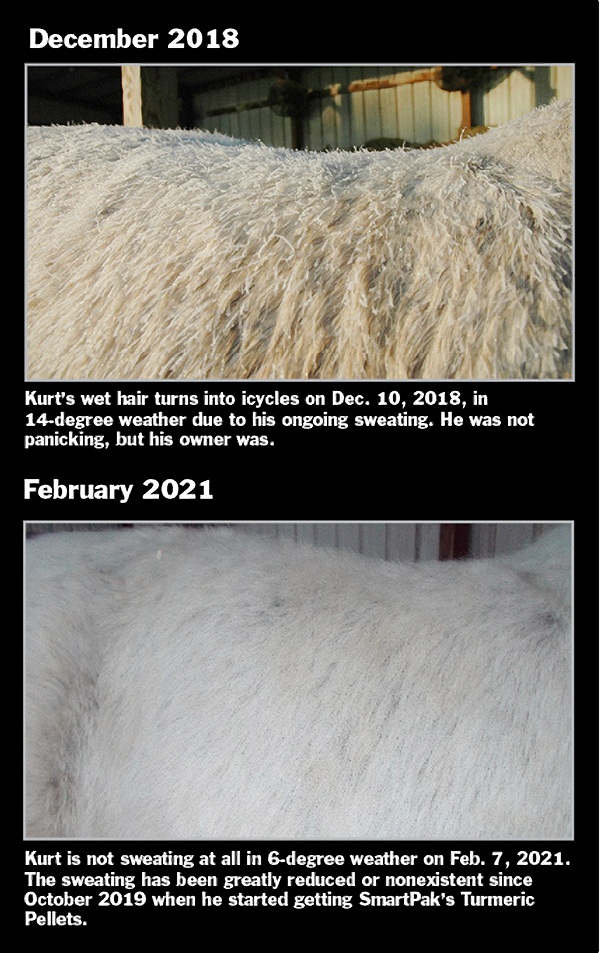
Last winter, the ground was covered in snow and ice for months here, much like other parts of the country. Anytime that Kurt was cut off from grass, he had terrible bouts of diarrhea. The temperature was in the teens many of those days, so cleaning him up was challenging (basically, I was sliding the poopsicles off his tail hair piece by piece, but unfortunately often taking his hair, too). Pepto-Bismol did help Kurt’s stomach. I couldn’t drive out to get more for a while, so I was rationing it, but it helped.
Kurt seemed like he was eating some hay at the time, but he tosses his hay around a lot, so it’s hard to keep track.
I’m trying to make sure we have a good forage solution in place this year, if we have a lengthy snow event again.
Does he eat the chopped hay? Yes, if he likes the hay. If he doesn’t like the hay, he’ll nibble at the chopped hay and then head out to his pasture.
Bowling and croquet
For enrichment, Kurt has resumed working on his ball skills. We use a 75 cm (29.5 inches) Athletic ball for bowling and a smaller ball (55 cm, or 21.7 inches) to play croquet through hula hoops. See attached video.
I didn’t know hula hoops come in different sizes. A 75 mm ball fits through a bigger hoop of the brand I bought at Walmart (Kess Tie-Dye Sport Hula Hoop), but I originally bought two smaller hoops of the same brand, so we had to get the smaller ball.
We formerly had a big horse soccer ball with a cover over it, but the cover got disgustingly dirty over the years, and I had to cut it off to wash it, unless I wanted to deflate the ball. I was too lazy to sew the cover back on. And the ball had a leak anyway. Gave up on that one.
The Athletic balls are cheap (under $14). So far, no holes.
If I roll the bigger Athletic ball to Kurt, he rolls it back well. If I place it in front of him, say for bowling, he often just stares at it, as if to say, “You’re doing it wrong.” We don’t bowl much because I’ve been told I’m too slow resetting the pins, so it’s not a big deal.
Lately, we’ve tried to play some sort of a ball game every day. He’s interested.
Kurt can still trot and canter, but he never does it when I am prepared to video it.
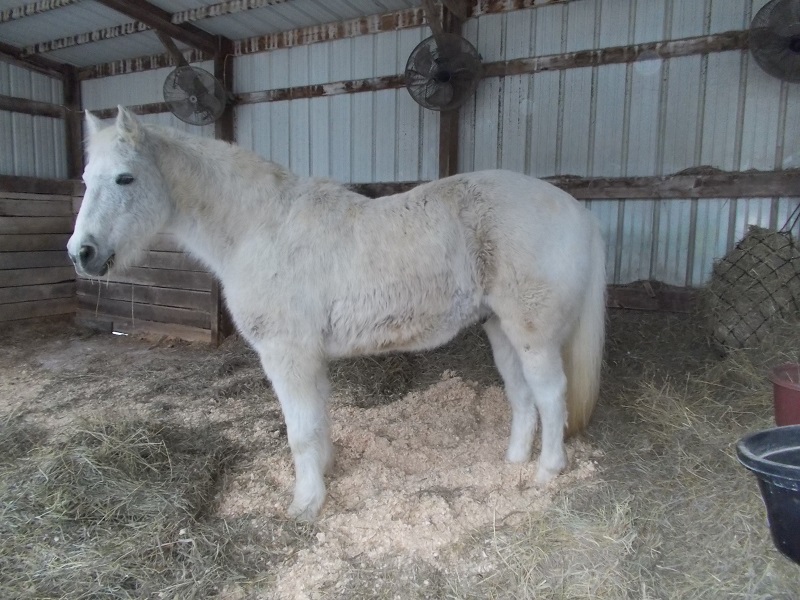
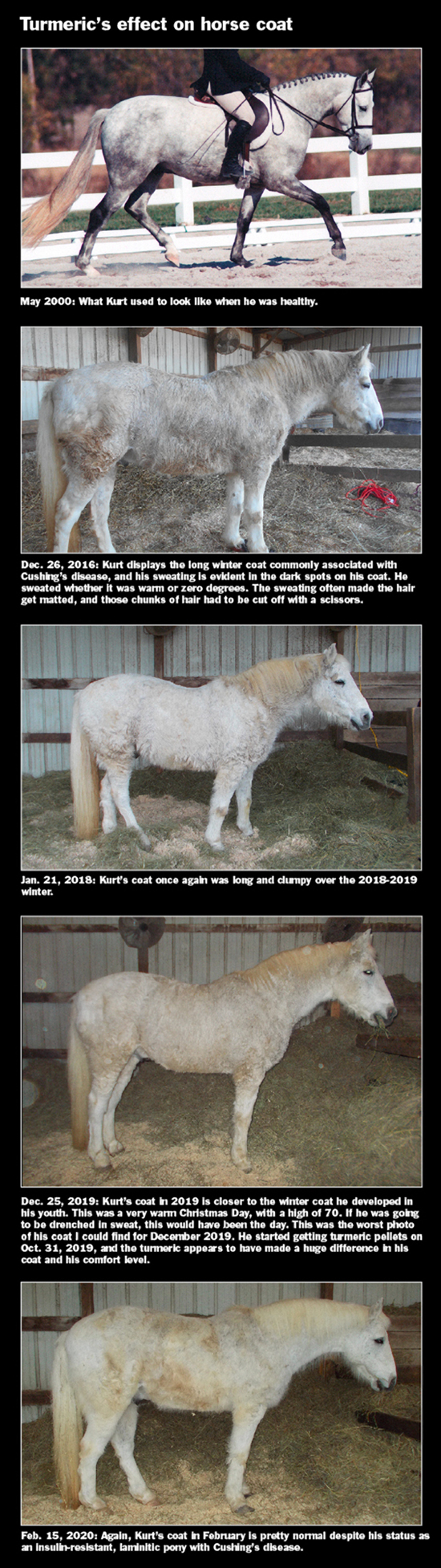
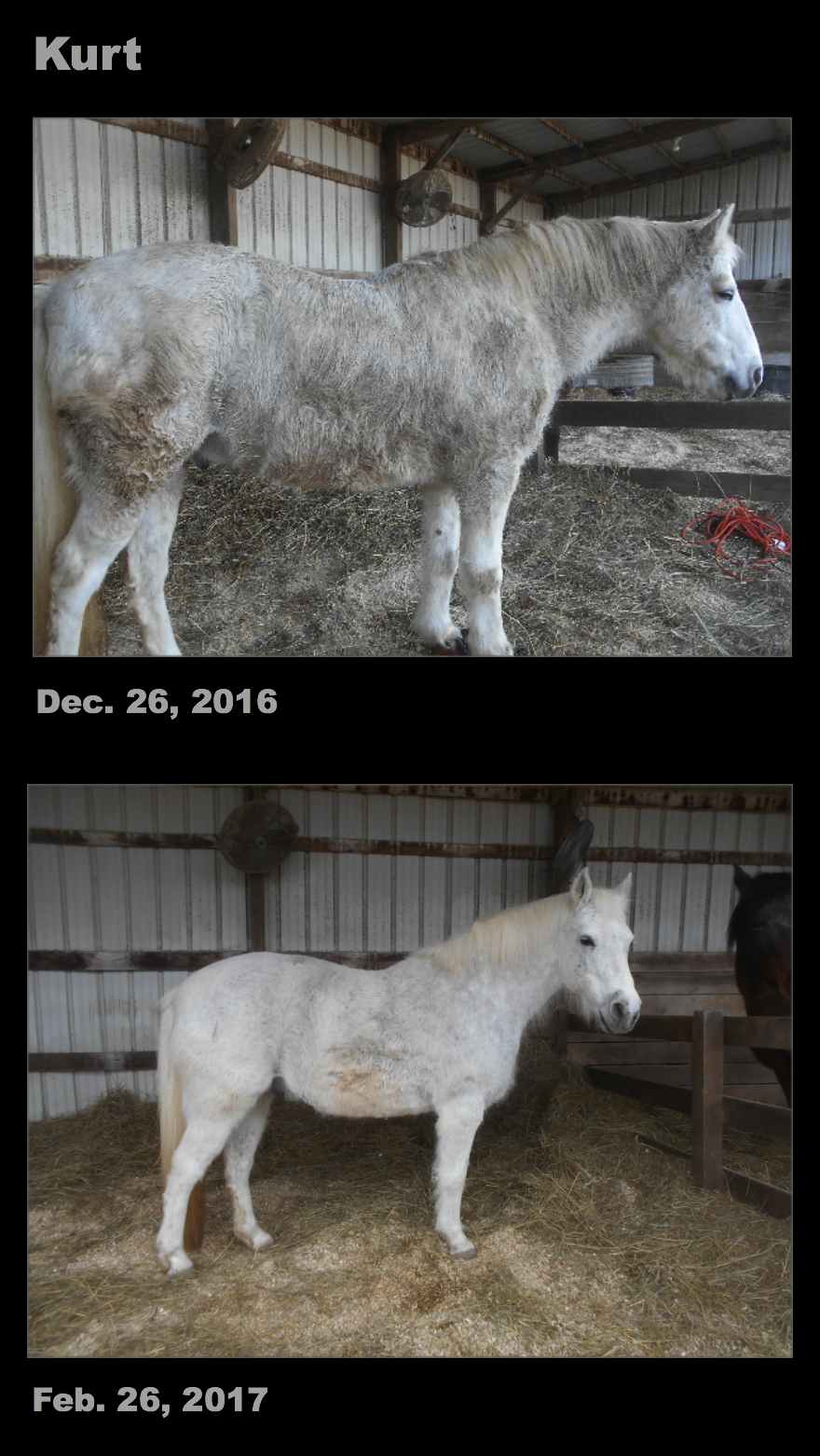
I included two clips of him walking around in 2025 in the video. He looks like a totally different horse, depending on whether he has his winter coat, but it’s really him in both the May and November clips. When I shed out his winter coat in the spring, a lot of the hair is 6 inches or longer. On the plus side, I don’t have to worry about him being cold during the winter.